Scaling Real-Time Support Infrastructure
Architecting a high-availability Socket.IO gateway on AWS for enterprise clients.
Professional Note
This case study reviews architectural challenges solved during my internship. To comply with NDA, all proprietary data, client details, and internal IPs have been obfuscated. The demo video uses a sanitized 'clean-room' environment.
Deep Dive: Resilient File Transfer Protocol
S3 Architecture that bypasses server bottlenecks and self-heals expired links
Phase 1: Zero-Trust Direct Uploads
To prevent server bottlenecks, I implemented a direct-to-cloud pattern. Clients request a temporary AWS S3 Presigned URL from the backend, then upload binary data directly to a private bucket. This bypasses the Node.js event loop, ensuring chat latency remains <100ms even during large file transfers.
Impact: Eliminated server memory spikes during concurrent uploads
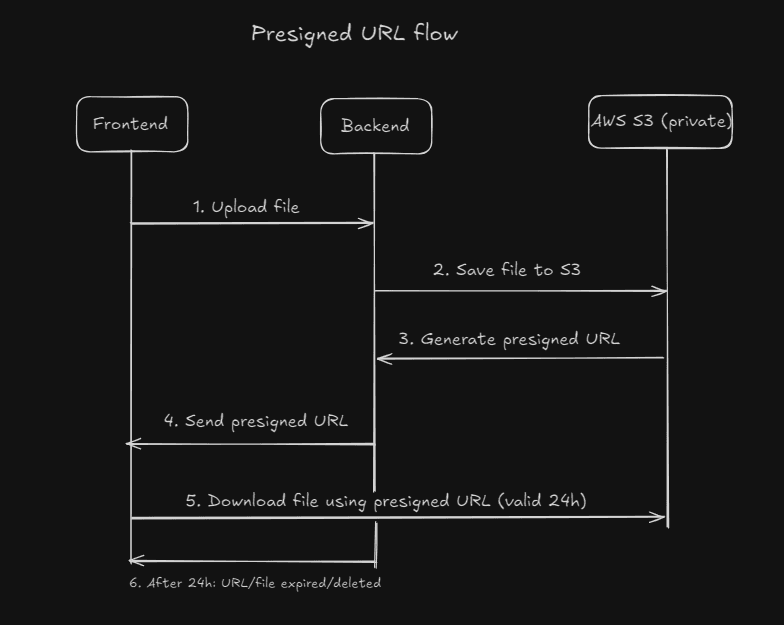
Diagram: S3 Presigned Upload Sequence
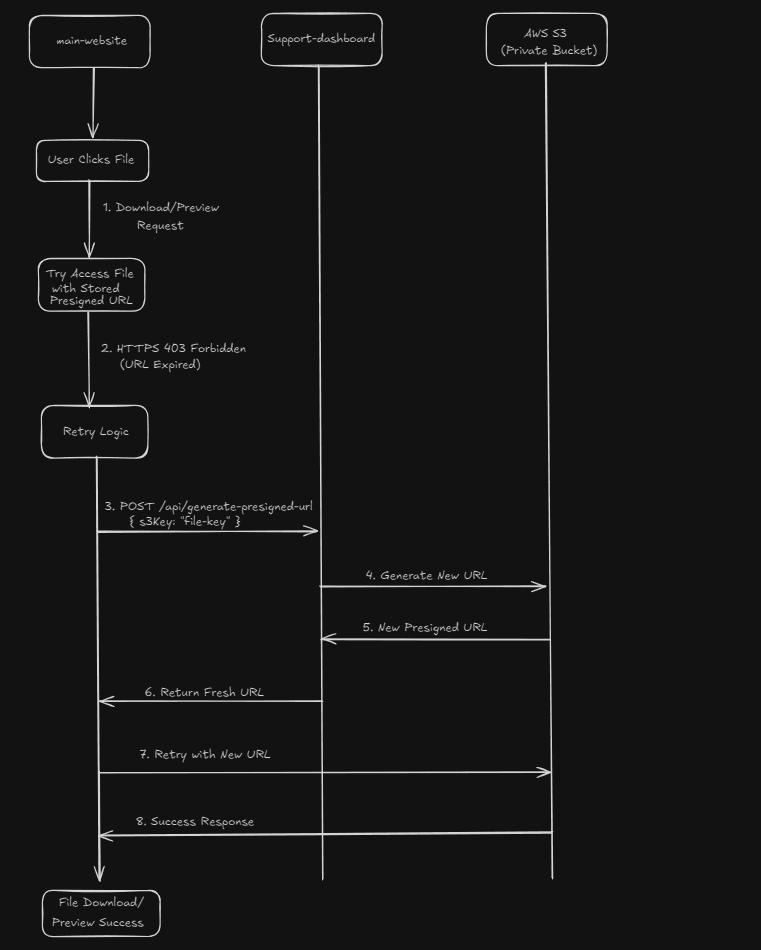
Diagram: 403 Expiry Interception & Refresh Flow
Phase 2: Self-Healing Link Recovery
Secure read-tokens expire after 24 hours, causing broken images. I implemented a frontend interceptor that detects 403 Forbidden responses from S3. It silently requests a fresh token from the API and retries the image load transparently, creating a seamless user experience.
Result: Zero user-visible errors from expired presigned URLs
The Architectural Shift
Evolution from resource bottleneck to horizontally scalable infrastructure
Phase 1: Decentralized Mesh
Initial prototype where every client website maintained a direct, heavy socket connection to the dashboard. Scalability bottleneck: O(N) connections per agent.
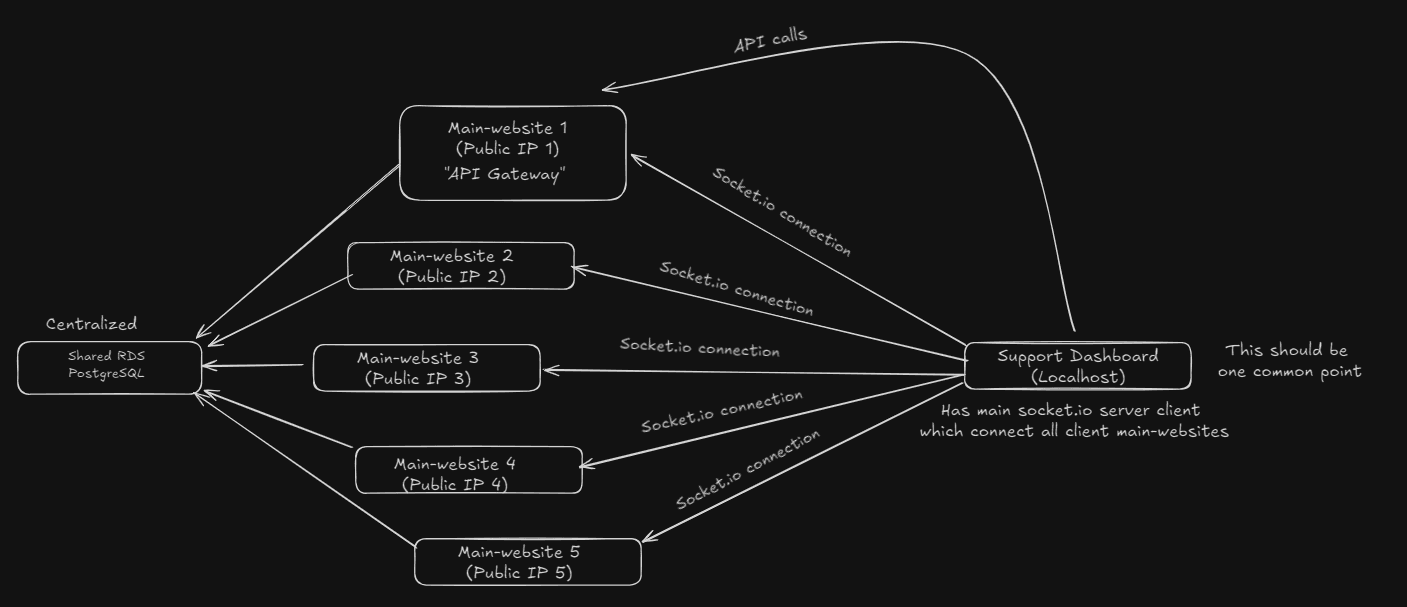
Problem: Each new client multiplied server load exponentially
AWS Cloud Topology
Production-grade infrastructure spanning compute, persistence, storage, and identity layers
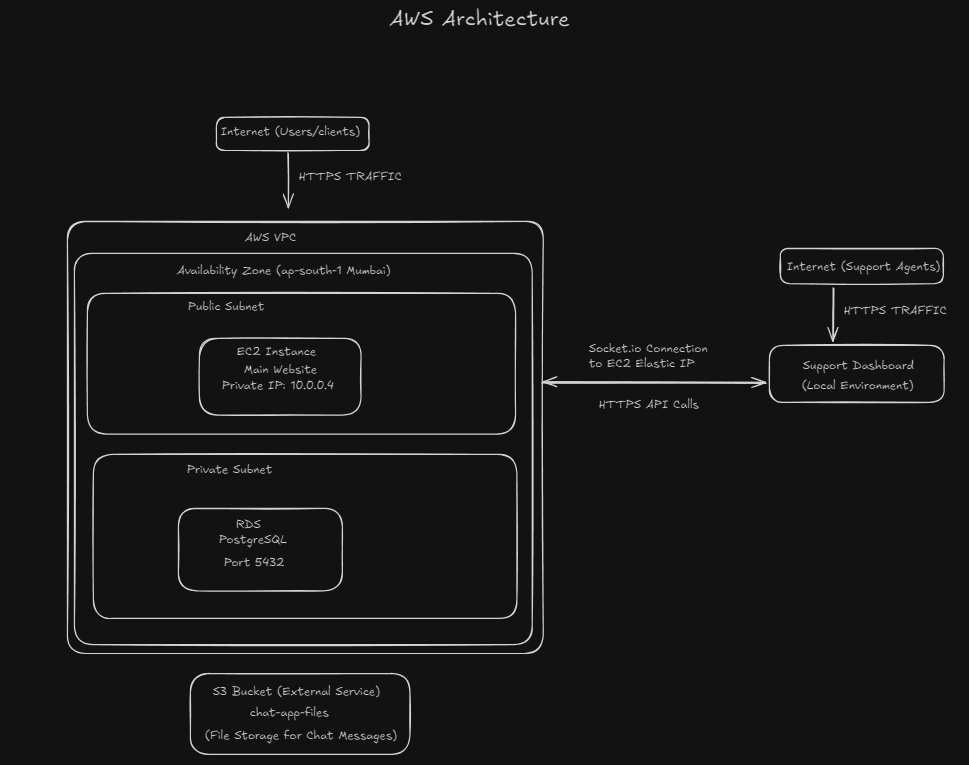
Production Environment: EC2 (App Layer), RDS (Persistence), S3 (Storage), Cognito (Identity)
Live System Demo
Watch the full system in action — sanitized for public viewing
Sanitized Technical Demo (Clean-room environment)
Production Outcome
Deployed to production achieving enterprise-grade reliability and performance benchmarks